
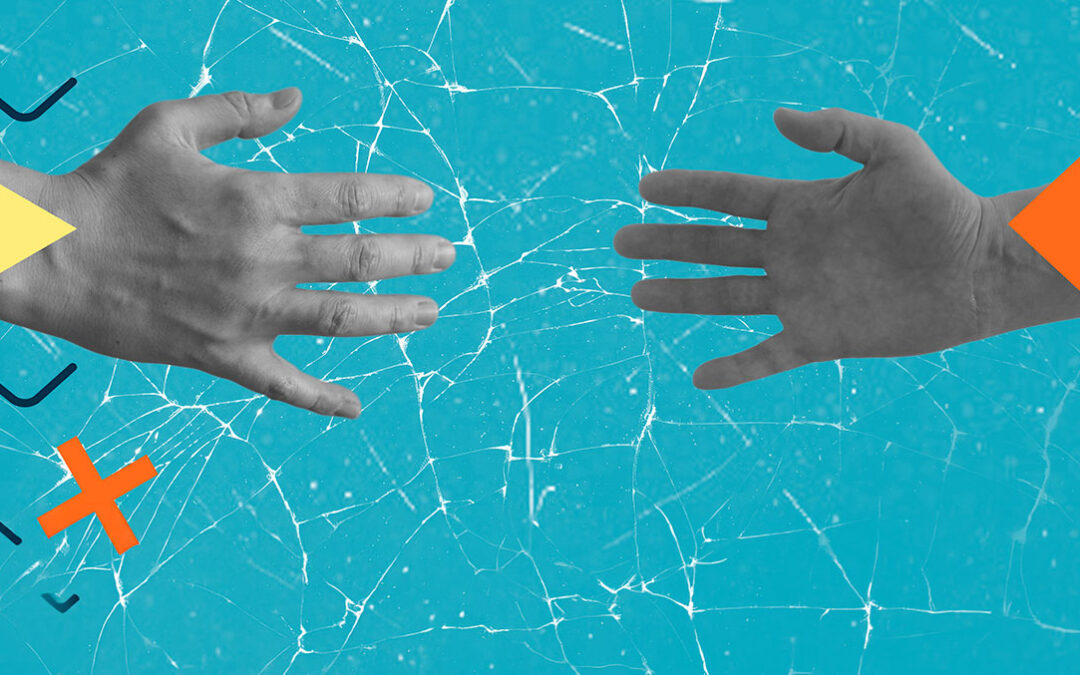
As the AECED project reaches its close, it feels important to pause – not simply to summarise outcomes, but to honour the energy, imagination and courage that educators, researchers, learners and partners have invested over these three years. What began in April 2023 as a shared commitment to reimagine democracy in and through education has grown into something far richer: a living network of people across Europe exploring what democracy feels like in everyday learning.
From the outset, AECED was built on a simple yet radical understanding: democracy is not solely something we learn about; it is something we learn by doing, sensing, moving, imagining and relating. It is lived in the here-and-now – through how we listen, how we share space, how we navigate difference and how we build trust through everyday encounters. This dimension of learning for democracy is often overlooked , with knowledge and debate still taking centre stage. AECED set out to change that. Grounded in participatory action research across six European countries – Croatia, Finland, Germany, Latvia, Portugal and the UK – the project has worked to strengthen the aesthetic, affective and embodied roots of democratic learning.
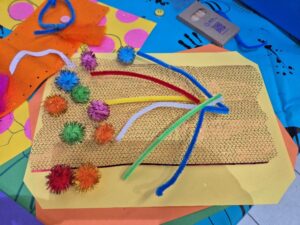
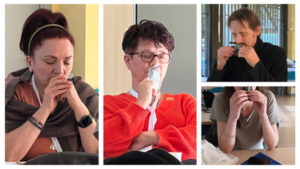
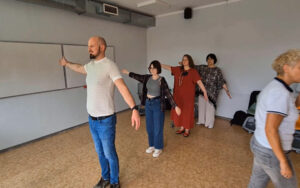
Over the past three years, we have seen again and again how transformative these approaches can be. Educators and learners – from early childhood to higher education and adult learning –have found new ways to explore democratic values such as freedom, equality and responsiveness. Through movement, sensory reflection, image, story, role‑play and collaborative creation, democracy became not simply a topic of discussion but an experience to be felt, negotiated and reflected upon.
 |
 |
 |
 |
We are proud to share the openly accessible resources developed directly through the project:
– A Pedagogical Framework outlining the principles of aesthetic and embodied learning for democracy
– Guides to Practice offering concrete approaches for educators across all educational phases
– Practice Companions with reflective tools, prompts and templates
These materials are designed for adaptation across educational phases, national contexts, organisational settings and varying democratic traditions.
They are an invitation to: experiment, start small, bring aesthetic and embodied methods into teaching or facilitation, and cultivate democratic sensibility in ways that resonate with the needs of your learners, communities and institutions.
AECED has always been about more than a project timeline. It is about strengthening the democratic futures we build together – in classrooms, studios, meeting rooms, hallways and digital spaces. It is about widening our sense of what counts as learning, and who we can become when we treat democracy as a lived, relational experience.
To everyone who has been part of this journey: thank you. Your curiosity, your openness and your courage to try something different have shaped AECED as much as any formal outcome.
As we move forward, we warmly invite you to explore the resources, share them, adapt them, question them and bring them alive in the contexts that matter to you.
Our website offers a range of resources and pathways to aid this participation, some of which we describe below. By interacting with our website and available resources users are invited to explore, understand and experience democracy in new ways that are responsive and meaningful to their given educational context. Visitors will find that they can navigate the Website through various sections, multiple entry-points and pathways in a non-linear way.
This page describes the understanding that sits at the heart of the work the project has undertaken. In addition, it provides links to core pages within the website before sharing reflections from trailblazers, guide champions and European Deliberative Dialogue participants.
This page is the orientation hub of the AECED website. It helps visitors navigate the project by providing four clear routes into AECED’s materials:
- The conceptual foundations of AELD
- Practical tools and examples
- Policy level considerations
- Background information about the project
It frames the website as a set of interconnected pathways that users can explore depending on their interests or roles (educator, policymaker, researcher, practitioner) and regardless of role invites the site visitor to explore the ideas within the AECED Pedagogical Framework [LINK}.
A video “What is aesthetic and embodied learning for democracy-as-becoming?” represents voices across the AECED project explaining aesthetic and embodied learning for democracy.
This page explains the core concepts behind Aesthetic and Embodied Learning for Democracy (AELD). It synthesises the AECED Pedagogical Framework [LINK} and provides :
- Key characteristics of AELD
- Key ideas that shape AELD
- A glossary of frequently used terms
- Links to further reading
On this page visitors will also find a Glossary of terms to help become accustomed to the terminology that the project uses, and scrolling below, there are clear links to the full Pedagogical Framework, Guides for Practice, Position papers and Blogs those wanting to dive deeper.
This page provides phase-specific research informed practical resources that include:
- Ways for educators to try out AELD methods
- Activity ideas
- Examples drawn from AECED case studies
- Approaches for integrating embodied and aesthetic learning into lessons, workshops, or organisational contexts
A good first step is to watch the introductory video: “Introducing the Framework, Phase Guides and Practice Companions”. This gives a clear overview of how the resources are structured and how they can be used. Below the Video there are the pathways to the four educational phases Practice Guides and Practice Companions.
For the visitors who unfamiliar with and new to AELD, we suggest beginning with the Guide. For those who feel ready to experiment, they can explore an activity from the Practice Companion. To gain a full comprehensive understanding of the underlying conceptual foundations, visitors can download the Framework.
This page explores how aesthetic and embodied approaches can inform and strengthen democratic culture through everyday educational practice. It includes ways to explore, expand and support the AECED work for a range of roles and contexts:
- Educators, teacher educators and facilitators
- Educational organisations and leaders
- National/European policy actors and curriculum designers
- Researchers and artists
It presents AELD not only as a pedagogy but as a system level opportunity for evolving democratic education. This page invites users to explore AELD through experimentation; expand AELD by sharing experiences and support AELD by removing barriers and advocating for its integration. Users can select and find out more information in context to their roles here.
You can read our policy brief here.
By visiting About the AECED Project section visitors can find out about the Project Aims and Impact. There are further pathways to explore including information about the Consortium, Publications and Project outputs and recommendations. This page provides:
- The overarching aims and impacts of the 3year Horizon Europe and UKRI funded project
- A description of the international consortium and partners
- A publications list
- A list of project outputs
AELD – so what next?
What happens next is up to you. Aesthetic and Embodied Learning for Democracy is not seen by the AECED Project as an add-on. The AECED website is a space designed to inspire visitors to explore ideas, resources, and adaptable tools that can be used across diverse educational contexts. It welcomes those who want to dive deeply into the AECED project as well as those curious to explore with a light touch. It’s a place to return to again and again, each visit offering something new for anyone seeking to create change, from the grassroots to policy levels. The site supports educators, leaders, practitioners and policy makers in finding creative, practical, and meaningful ways to teach for democracy and live democracy through relational, participatory everyday practices across learning environments, institutions, and policy frameworks.
Let’s keep cultivating democratic futures—one embodied encounter at a time.
Scan the QR code below to go straight to our Putting AELD into action page and access our resources.

#Education4Democracy